Why a cricketer lowers his hands while catching a ball?

Initially, the ball is moving with a certain velocity and the player has to apply a retarding force to bring the ball to rest in his hand. As change in momentum dP = F × dt, if he abruptly catches the ball; i.e. dt is small, then he will have to apply a large retarding force due to which he gets hurt.  If he lowers his hands, he would have to apply the smaller force for longer time to bring the ball to rest. Hence he would not get hurt.


Why the spring is made of steel and not of copper?

The elasticity of steel is more than that of copper. Therefore, for the same applied force, the elongation of steel spring is less than that of copper for same initial length. Therefore the steel springs may bear the higher tension before the elastic limit is crossed. That is why spring is made of steel.

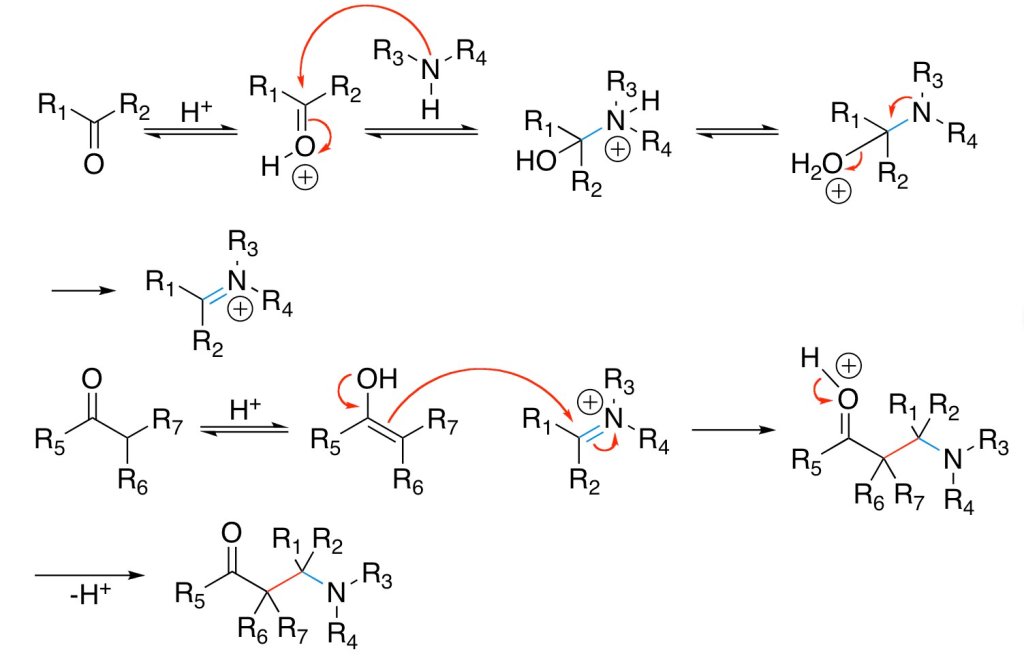
What is reaction mechanism?

The detailed step by step description of a chemical reaction is called reaction mechanism.
Substrate + reagent -> intermediate -> product
*Substrate:- The reactant molecule which is attacked by any reagent.
*Reagent:- The attacking species eg. Electrophiles, Nucleophiles, Free Radicals, etc.

Example of reaction.
Example of mechanism of organic reaction.

What are d-block(transition) elements?

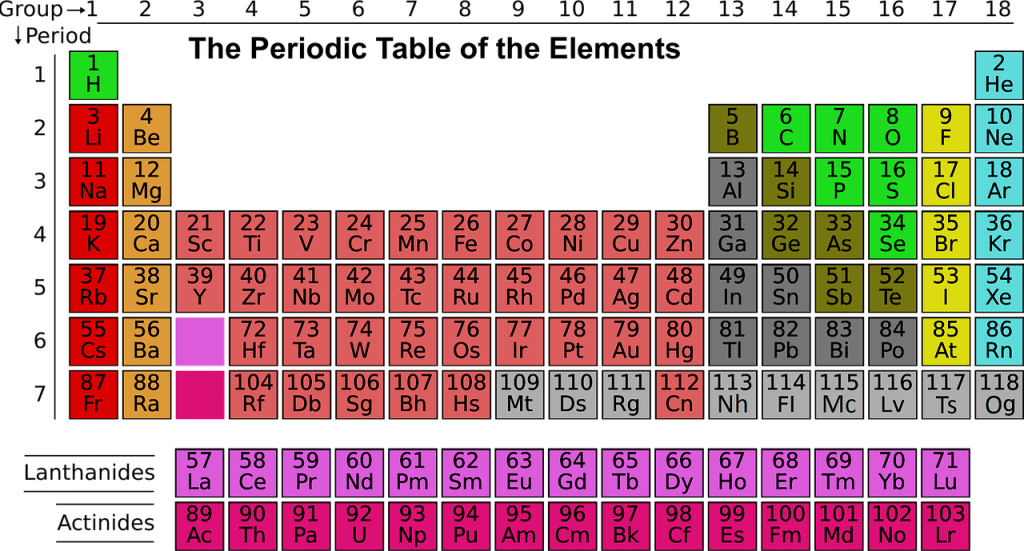
The group of metals in the middle of the periodic table, whose (n-1) d- orbitals are partly filled in atomic state or any ionic state are called transition elements or d-block elements.
Those elements are called transition elements because the general characteristic properties are intermediate between most electro-positive s-block elements to least electro-positive p-block elements.
There are four transition series:
1.First Transition Series(3d-elements): It contains ten elements from Scandium(At.no.21) to Zinc(At.no.30).
*Where At.no. means Atomic Number
2. Second Transition Series(4d-elements): It contains ten elements from Yttrium(At.no.39) to Cadmium(At.no.48).
3.Third Transition Series(5d- elements): It contains 10 elements from Lanthanum(At.no.57) and Hafnium(At.no.72) to Mercury(At.no.80).
4.Fourth Transition Series(f-block elements): It contains Lanthanides and Actinides.
             Note:-Non-typical or pseudo transition elements are Zinc(Zn), Cadmium(Cd) and Mercury(Hg).

Red coloured elements are transition elements.